In West Hartford, the West Hartford Animal Control is asking the community to report any bear sightings to the state as an injured bear is being monitored after being spotted stealing pumpkins from the front yards of homeowners.

Multiple residents have reported the bear who appears to be injured.
In a public service announcement, the agency states they are monitoring the bear and want to assist the bear in recovering from its injury, but there is nothing that can be done.
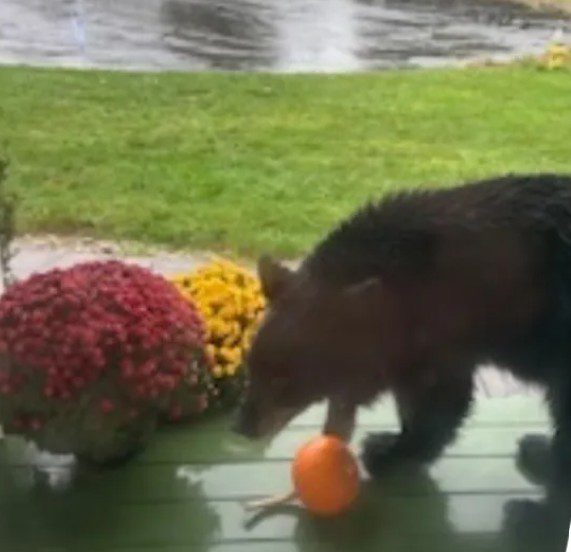
The bear may appear to be struggling to move or care for itself, but our observations today indicated the opposite.
We witnessed the bear running despite its injured leg/paw. Bears are remarkably resilient and adaptable, capable of overcoming numerous challenges, including physical injuries. The bear has demonstrated a strong will to persevere.
Officials collaborating with D.E.E.P. will continue to provide updates. They have consulted with an EnConn Officer today for guidance, and some residents may have seen the officer walking with our ACOs. The EnConn Officer was equipped with a shotgun loaded with less lethal rounds (bean bags).
If you encounter the injured bear or any other bears roaming in town, please report the sighting using this link: https://survey123.arcgis.com/…/5243a30ef25a4731941644a3….
The form will be submitted to D.E.E.P., which tracks bear sightings throughout Connecticut.
For any questions or concerns, please feel free to contact us at (860) 570-8818 or email.
Please note this is the time of year bears are eating more in preparation for hibernation. Let’s help to protect bears by keeping them wild.
The primary contributing factor to bear nuisance problems is the presence of easily accessible food sources near homes and businesses. Fed bears can become habituated and lose their fear of humans. Bears should NEVER be fed, either intentionally or accidentally. Connecticut residents should take the following simple steps to avoid conflicts and problems with black bears:
DO eliminate food attractants by placing garbage cans inside a garage or shed. To make trash unpalatable, add ammonia.
DO keep your garage and residence doors closed to keep bears from entering your home.
DO remove bird feeders and bird food from late March through December.
DO eliminate food attractants by placing garbage cans inside a garage or shed. Add ammonia to trash to make it unpalatable.
DO clean and store grills in a garage or shed after use. (Propane cylinders should be stored outside.)
DO keep dogs on a short leash and under control. A roaming dog might be perceived as a threat to a bear or its young.
DON’T feed bears. Bears accustomed to finding food near your home may become “problem” bears.
DON’T approach or try to get closer to a bear to get a photo or video.
DON’T leave pet food outside overnight.
DON’T add meat or sweets to a compost pile.
DON’T store leftover birdseed or recyclables on a porch or screened sunroom, as bears can smell them and will rip screens to get at them.
If a bear is in a densely populated area, contact the DEEP Wildlife Division (860-424-3011,
Follow the National Pet Rescue on Facebook for the latest animal related news.